



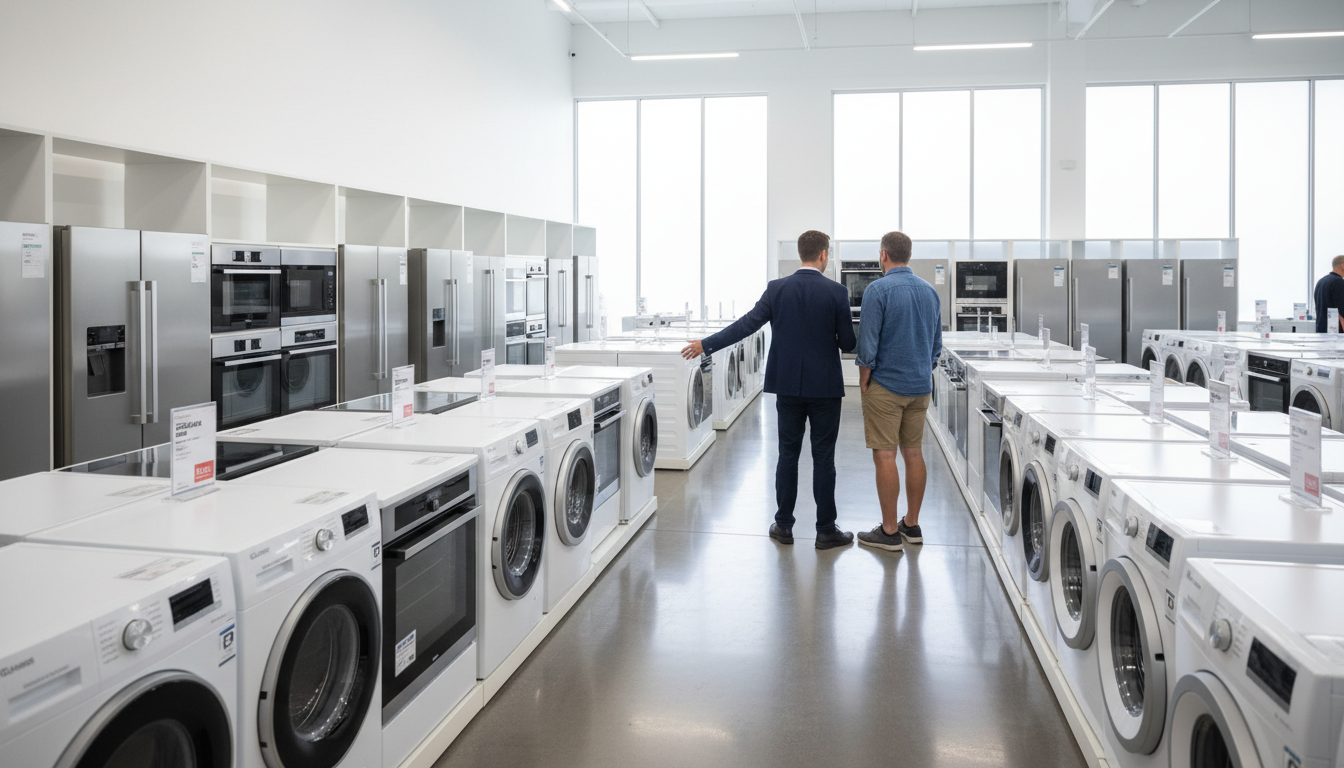
If you’ve shopped for discount appliances Sydney retailers offer, you’ve likely noticed the same fridge or washing machine can vary by hundreds of dollars between stores. A Samsung 450-litre refrigerator might be $1,899 at one retailer, $1,499 at another, and $1,199 at a factory outlet. For budget-conscious Sydney homeowners, first-home buyers, and renovators, this price confusion creates genuine anxiety. Are you getting the same appliance? Is the cheaper one faulty? Will your warranty still apply? This explainer addresses why appliance prices vary so dramatically across Sydney stores, what drives those differences, and how to compare prices fairly without compromising on quality or consumer rights.
The single biggest factor affecting appliance pricing is stock type. Not all appliances sold as “new” are identical in condition or origin, and understanding these distinctions explains most price variations you’ll encounter across Sydney retailers.
Brand new clearance stock consists of unused appliances with full manufacturer warranties. These are typically discontinued models, end-of-line stock, or overstock that retailers need to move quickly. The appliance has never been used, comes in original packaging, and carries the manufacturer’s standard warranty period. Discounts typically range from 10-25% below recommended retail.
Factory seconds or 2NDS appliances have minor cosmetic imperfections—small dents, scratches, paint chips, or finish inconsistencies—that occurred during manufacturing or transport. These imperfections don’t affect functionality, energy efficiency, or performance. To understand what factory seconds appliances are and why they represent genuine value, it’s important to note that under Australian Consumer Law (ACL) Schedule 2 of the Competition and Consumer Act 2010 (Cth), these appliances still carry mandatory statutory warranties and the guarantee of acceptable quality. Factory seconds typically offer 20-40% savings compared to brand new retail stock.
Carton damaged stock refers to appliances where the packaging has been damaged during transport or warehousing, but the appliance itself is typically unaffected. The outer carton may be crushed, torn, or water-stained, but the appliance inside remains protected by internal packaging and foam. These units are inspected before sale and usually offer 15-30% discounts.
How retailers source their stock directly impacts pricing. Premium retail chains typically purchase through multi-tier distribution networks, with each intermediary adding markup. A washing machine might pass through an importer, national distributor, and regional warehouse before reaching the showroom floor, with each step adding 8-15% to the cost.
Factory outlets and specialist discount retailers often maintain direct relationships with manufacturers and authorised importers. This direct access eliminates intermediary costs and allows retailers to purchase factory seconds, clearance stock, and carton damaged units at significantly reduced wholesale prices. These savings are passed directly to customers.
Volume purchasing agreements also affect pricing. Retailers who commit to purchasing large quantities of specific models—including factory seconds and clearance stock—receive better wholesale pricing. This is particularly relevant for brands like Samsung, LG, Fisher & Paykel, Hisense, and Westinghouse, which produce high volumes and regularly have factory seconds available.
Operating costs vary dramatically between retail formats, and these differences directly affect pricing. Premium showrooms in high-traffic Sydney locations like Bondi Junction, Chatswood, or the CBD pay substantially higher rent than outlets in South West Sydney locations like Gregory Hills. Commercial rent in premium retail precincts can exceed $1,500 per square metre annually, compared to $200-400 per square metre in industrial or outer suburban areas.
Staffing costs also differ significantly. Premium showrooms typically employ larger sales teams with commission structures, while factory outlets operate with leaner teams focused on product knowledge and customer service rather than high-pressure sales tactics. Display costs represent another major expense—premium retailers maintain extensive floor displays of every model, requiring significant space and capital investment.
Online-only retailers eliminate showroom costs entirely but often lack the ability to offer same-day delivery, free removal of old appliances, or in-person product inspection. Factory outlets like 2NDS Appliances at 1/9 Rodeo Rd, Gregory Hills NSW 2557 balance these approaches by maintaining a physical showroom in a lower-cost location while offering Sydney-wide delivery, combining the cost advantages of reduced overheads with the customer service benefits of a physical presence.
Factory outlets specialise in discount appliances in Sydney by focusing on stock that traditional retailers can’t or won’t sell at full retail prices. This includes factory seconds with minor cosmetic imperfections, carton damaged units, discontinued models, and clearance stock from manufacturer overruns.
Because factory outlets purchase these appliances at reduced wholesale prices and operate with lower overheads, they can offer 20-50% savings compared to premium retail showrooms while still maintaining healthy margins. The business model relies on volume sales and efficient operations rather than high per-unit profit margins.
Importantly, lower prices don’t mean reduced consumer rights. The warranty protections under Australian Consumer Law apply equally to all stock types. Whether you purchase a brand new Samsung refrigerator from a premium showroom or a factory seconds unit from an outlet, your mandatory statutory warranties under ACL remain identical. NSW Fair Trading confirms that retailers cannot exclude or limit these statutory guarantees based on stock condition or discounted pricing.
Additional value factors at factory outlets often include free Sydney-wide delivery, same-day delivery availability, and free removal of old appliances—services that premium retailers may charge separately. Buy now pay later options through Afterpay, Zip, Latitude, and Humm make larger purchases more accessible without interest charges when paid within promotional periods.
The term “cheap” carries negative connotations that don’t accurately reflect quality discount appliances. There’s a critical distinction between low-quality appliances sold at appropriately low prices and high-quality appliances sold at discounted prices due to cosmetic imperfections or clearance circumstances.
A genuinely cheap appliance might use inferior components, lack energy efficiency features, or come from an unknown brand with limited service networks. These appliances are cheap because they’re built to lower standards. In contrast, a discounted Samsung, LG, Fisher & Paykel, or Electrolux appliance from a factory outlet is a premium product sold at a reduced price—the manufacturing quality, energy efficiency, and performance remain unchanged.
Understanding common mistakes when buying discounted appliances helps buyers distinguish between genuine value and false economy. Key indicators of quality discounted appliances include recognised brand names, compliance with Australian energy efficiency standards, authorised retailer status, and clear disclosure of stock condition.
Factory seconds from reputable brands maintain identical internal components, inverter compressors, heat pump technology, and energy star ratings as their full-price equivalents. A factory seconds Hisense refrigerator with a small dent on the side panel delivers the same cooling performance and energy efficiency as the showroom model—the discount reflects cosmetic condition only.
Warranty terms and consumer rights protections are often misunderstood factors in appliance pricing. Many buyers assume discounted appliances come with reduced warranty coverage, but this is incorrect when purchasing from authorised retailers in Australia.
Under Australian Consumer Law (ACL) Schedule 2 of the Competition and Consumer Act 2010 (Cth), all appliances sold in Australia carry mandatory statutory warranties regardless of price paid or stock condition. These statutory warranties guarantee that appliances are of acceptable quality, fit for purpose, and match their description. The ACCC emphasises these rights exist independently of any manufacturer warranty and cannot be excluded by retailers.
Brand new clearance stock typically includes the manufacturer’s standard warranty period—usually 1-2 years for parts and labour, with extended warranties available for major components like compressors (often 5-10 years). Factory seconds and carton damaged stock from authorised retailers carry the same statutory warranty protections, though manufacturer warranties may vary depending on the brand’s policy for non-retail-perfect stock.
Some premium retailers inflate prices by bundling extended warranty packages into the base price, creating the illusion of superior coverage. Factory outlets typically offer optional extended warranties separately, allowing buyers to choose whether additional coverage beyond statutory rights is worthwhile for their circumstances.
The key consideration is purchasing from authorised retailers who honour both statutory warranties under ACL and any applicable manufacturer warranties. Grey import appliances or stock from unauthorised sellers may lack proper warranty support, regardless of price. Authorised factory outlets like 2NDS Appliances maintain direct manufacturer relationships ensuring full warranty compliance and service network access.
Price comparison should extend beyond initial purchase cost to include long-term running costs. Energy efficiency significantly impacts total cost of ownership, particularly for refrigerators, washing machines, dishwashers, and dryers that operate daily for 10-15 years.
All appliances sold in Australia must comply with the Greenhouse and Energy Minimum Standards Act 2012 (Cth) and display Energy Rating labels verified by Energy Rating Australia. These labels provide standardised energy star ratings (1-10 stars, with 10 being most efficient) and annual energy consumption estimates in kilowatt-hours.
A factory seconds refrigerator carries the same energy star rating as the full-price retail version because energy efficiency is determined by the appliance’s design and components, not its external cosmetic condition. A small dent doesn’t affect compressor efficiency, insulation performance, or temperature management. This means discounted factory seconds offer identical long-term running costs to premium retail stock.
When comparing prices across Sydney retailers, factor in energy ratings. A $1,399 factory seconds 5-star refrigerator represents better value than a $1,299 brand new 3-star model when you account for the $80-120 annual running cost difference over a 12-year lifespan. The higher-efficiency model saves $960-1,440 in electricity costs, more than offsetting any initial price difference.
Modern features like inverter compressors in refrigerators, heat pump technology in dryers, and inverter motors in washing machines deliver substantial energy savings compared to older conventional models. These technologies are standard in current Samsung, LG, Fisher & Paykel, Panasonic, and Electrolux models, whether purchased as brand new retail or factory seconds stock.
Fair price comparison requires understanding what you’re actually comparing. A $1,899 brand new retail Samsung refrigerator isn’t directly comparable to a $1,399 factory seconds version of the same model—they’re different stock types with different cosmetic conditions but identical functionality.
Start by identifying the exact model number. Appliances with similar names or appearances may have different features, capacities, or energy ratings. A Fisher & Paykel 519-litre French door refrigerator might come in multiple variants with different internal configurations, ice makers, or smart features. Verify you’re comparing identical models.
Clarify the stock condition. Ask retailers explicitly whether the appliance is brand new retail stock, factory seconds, or carton damaged. Reputable retailers will disclose this information clearly. If a price seems unusually low without explanation, request details about stock condition and warranty coverage.
Factor in delivery costs and services. Some retailers advertise low prices but charge separately for delivery, installation, and removal of old appliances. These additional costs can add $100-300 to the total price. Factory outlets offering free Sydney-wide delivery, same-day availability, and free removal provide better overall value even if the appliance price is slightly higher than a competitor charging for these services separately.
Verify the retailer’s authorisation status. Authorised retailers maintain direct manufacturer relationships, ensuring genuine Australian-spec appliances with proper warranty support and access to service networks. Grey imports or parallel imports may be cheaper but can lack local warranty coverage and service availability.
Learning how to identify genuine appliance deals helps distinguish between legitimate discounts and pricing tactics designed to attract buyers without delivering real value. Genuine deals typically involve factory seconds, clearance stock, or discontinued models from recognised brands sold by authorised retailers with transparent pricing and full disclosure of stock condition.
Consider bundle savings when purchasing multiple appliances. Kitchen renovation packages combining refrigerators, dishwashers, and cooking appliances can deliver up to 20% savings compared to individual purchases. Factory outlets often offer flexible bundle configurations across brands like Samsung, LG, Westinghouse, and Electrolux.
Finally, assess the retailer’s reputation and customer service. Online reviews, NSW Fair Trading records, and recommendations from Sydney homeowners provide insight into post-purchase support, warranty claim handling, and overall reliability. The cheapest price means little if the retailer provides poor service or complicates warranty claims.
For Sydney buyers seeking transparent pricing and comprehensive information about where to find the best appliance outlet deals in Sydney, visiting physical showrooms allows direct inspection of factory seconds stock, clear understanding of cosmetic imperfections, and confirmation of model specifications before purchase.
Factory seconds appliances have minor cosmetic imperfections—such as small dents, scratches, or carton damage—that don’t affect functionality. Under Australian Consumer Law (ACL) Schedule 2 of the Competition and Consumer Act 2010 (Cth), they still carry the same mandatory statutory warranties and guarantee of acceptable quality as brand new stock, but retailers can offer them at 20-50% discounts because they can’t be sold as ‘perfect’ retail items. The internal components, energy efficiency, and performance remain identical to full-price versions.
Yes, when purchased from authorised retailers. All new and factory seconds appliances sold in Australia are protected by mandatory statutory warranties under Australian Consumer Law, regardless of price. The Australian Competition and Consumer Commission (ACCC) confirms these rights cannot be excluded, even on discounted stock. Brand new clearance stock typically includes the manufacturer’s standard warranty, while factory seconds carry statutory warranties and may include manufacturer warranties depending on brand policy. Always verify the retailer is an authorised dealer to ensure full warranty support.
Price differences reflect stock type (brand new vs factory seconds vs carton damaged), retail overheads (premium showrooms vs factory outlets), supply chain relationships (direct manufacturer access vs distributor markup), and profit margins. Factory outlets like 2NDS Appliances at Gregory Hills operate with lower overheads and direct supplier relationships, enabling lower pricing on identical models. Premium retailers in high-rent locations like Bondi Junction or Chatswood pass those higher operating costs to customers. The appliance’s functionality and energy efficiency remain the same regardless of where you purchase it.
Not necessarily. All appliances sold in Australia must comply with the Greenhouse and Energy Minimum Standards Act 2012 (Cth) and display Energy Rating labels verified by Energy Rating Australia. A discounted factory seconds fridge has the same energy star rating and running costs as the full-price retail version—the discount reflects cosmetic condition, not performance. However, buyers should verify they’re comparing models with equivalent energy ratings, as some genuinely cheaper appliances may use older, less efficient technology. Always check the Energy Rating label to confirm efficiency regardless of price.
Compare genuine discount appliances Sydney at 2NDS Appliances Factory Outlet, 1/9 Rodeo Rd, Gregory Hills, or browse our full range online with transparent pricing and same-day Sydney delivery
Free delivery Sydney wide. Same-day delivery available. Free removal of your old appliance. Visit our showroom at 1/9 Rodeo Rd, Gregory Hills NSW 2557 or shop online.

Specialising in fridges and freezers of all brands as well as washing machines and more, grab a bargain today on our online store or visit our showroom factory.
Mon – Fri: 9am – 5:00pm
Sat: 9am – 5pm
Sun: 10am – 4pm
© 2026 2NDS Appliances Factory Outlet. | All Rights Reserved | Website by SWE
