



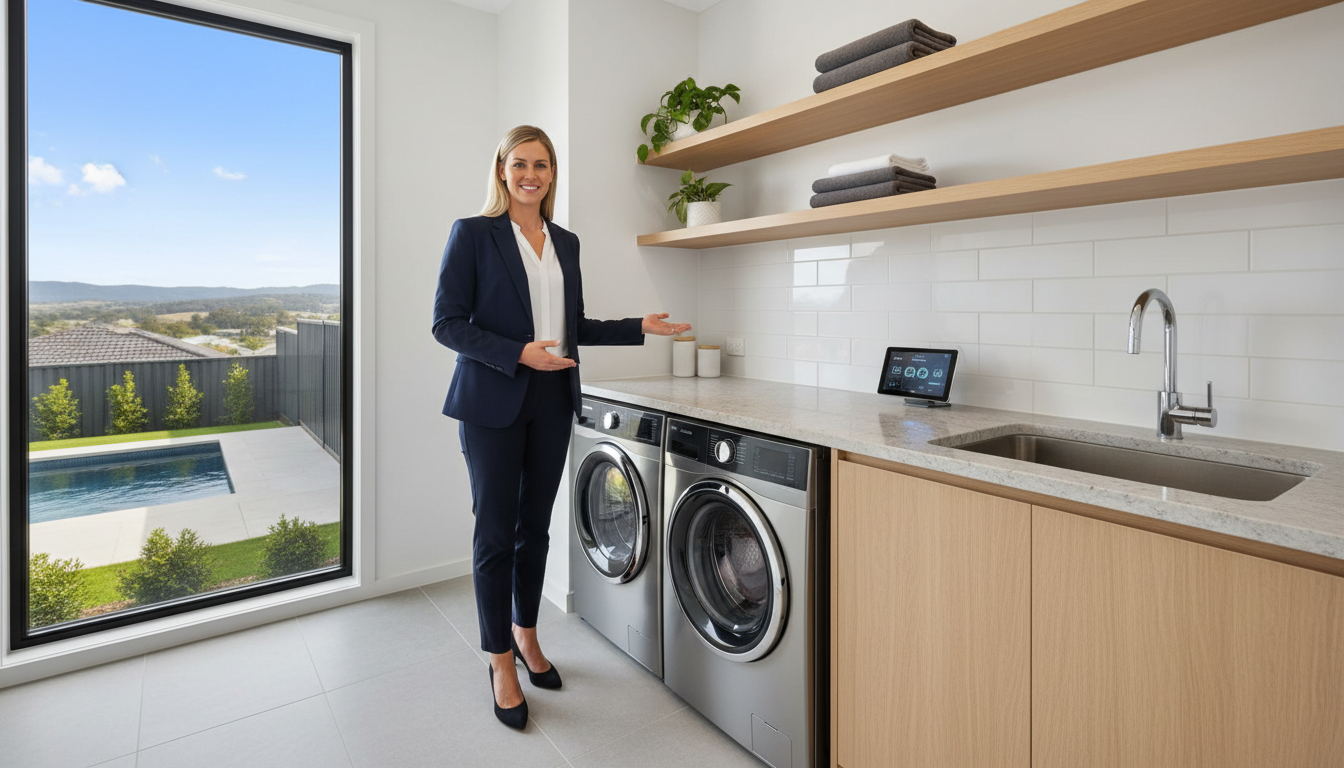
You’re standing in your laundry, tape measure in hand, staring at a space barely wide enough for one appliance. You need both a washer and dryer, but the numbers don’t add up. The question isn’t whether you want a washing machine and dryer sale deal, it’s whether a washer dryer combo actually saves you money compared to buying two separate machines.
For many Sydney households, particularly those in apartments, townhouses, or compact homes across South West Sydney, the financial case for a combo unit goes beyond the sticker price. When you factor in installation costs, space constraints, and running expenses, the math shifts considerably. This guide breaks down when a washer dryer combo delivers genuine cost savings and when separate machines still make more financial sense.
The Australian Bureau of Statistics (ABS) reports that 23% of Australian households live in apartments or units where laundry space is limited to single-appliance installations. If your laundry measures 600-800mm wide with no room for stacking or side-by-side placement, a washer dryer combo isn’t just convenient, it’s your only practical option without major renovations.
The financial advantage becomes clear when you consider the alternative. Installing separate machines in a space-constrained home often requires plumbing modifications, additional electrical work, or custom cabinetry to accommodate stacking kits. These modifications can add $400-$800 to your total project cost before you’ve even purchased the appliances. A combo unit requires a single cold water connection, one drainage point, and a standard 10-amp power outlet.
For renters in Gregory Hills, Oran Park, or Leppington, this matters even more. Landlords rarely approve structural changes to laundry spaces, and you can’t justify spending on plumbing upgrades for a property you don’t own. A combo unit slots into existing infrastructure without modification, making it the only financially viable path to having both washing and drying capability.
When shopping factory seconds washing machines, you’ll find combo units carry the same Australian Consumer Law (ACL) Schedule 2 of the Competition and Consumer Act 2010 (Cth) statutory warranty protections as separate machines, regardless of cosmetic imperfections. The guarantee of acceptable quality applies to functional performance, not surface scratches.
A mid-range 8kg washer and 6kg dryer purchased separately typically cost $1,800-$2,400 combined at retail pricing. An equivalent 8kg wash/5kg dry combo unit retails for $1,200-$1,800, representing an immediate $200-$600 saving on purchase price alone. When you explore how to save big on home appliances through factory seconds, that gap widens further.
| Cost Category | Separate Machines | Washer Dryer Combo |
|---|---|---|
| Purchase Price (Brand New) | $1,800-$2,400 | $1,200-$1,800 |
| Factory Seconds Pricing | $1,200-$1,600 | $799-$1,200 |
| Installation (Plumbing + Electrical) | $300-$800 | $150-$300 |
| Floor Space Required | 1,200mm+ (side-by-side) or stacking kit | 600mm single unit |
| Total Upfront Cost (Factory Seconds) | $1,500-$2,400 | $949-$1,500 |
Installation savings compound the purchase price advantage. A combo requires one set of connections: cold water inlet, drainage, and power. Separate machines need dual water connections for the washer, dedicated dryer power (often requiring a separate circuit for heat pump models), and potentially upgraded drainage capacity. Licensed plumbers in Sydney charge $80-$120 per hour, and a dual-appliance installation typically takes 3-5 hours compared to 1-2 hours for a combo.
At 2NDS Appliances, factory seconds combo units start from $799, offering 20-40% savings compared to brand new retail pricing while maintaining full statutory warranty protections under Australian Consumer Law (ACL). These units feature minor cosmetic imperfections such as small dents, scratches, or paint blemishes that don’t affect functionality. The Australian Competition and Consumer Commission (ACCC) confirms that factory seconds appliances must meet the same safety and performance standards as brand new stock under Australian Consumer Law (ACL) Schedule 2 of the Competition and Consumer Act 2010 (Cth).
Energy Rating Australia data shows that 4-star energy-rated washer dryer combos cost approximately $180-$240 annually to run based on 4 wash/dry cycles per week at average NSW electricity rates. This calculation assumes a complete wash and dry cycle using the combo’s ventless condensing drying system, which recirculates heated air rather than venting it externally.
Separate machines with equivalent energy ratings cost roughly $160-$220 annually for the same usage pattern. The $20-$40 annual difference reflects the combo’s slightly higher energy consumption during the drying phase, where ventless condensing technology requires more time and energy than a dedicated vented dryer. However, this modest increase is offset by eliminating dual standby power consumption, where two appliances draw phantom power 24/7 even when not in use.
Water consumption tells a similar story. Modern combo units use 60-80 litres per full wash cycle, comparable to standalone front-loader washing machines. The drying cycle in a combo doesn’t require additional water in ventless models, whereas some older vented dryers required water for cooling condensers. For households on Sydney Water’s tiered pricing, this translates to minimal difference in annual water costs.
The critical consideration is cycle time. Combos take 3-6 hours to complete a full wash and dry cycle, compared to 2-3 hours when running separate machines simultaneously. If you need to process multiple loads daily, the time constraint becomes a hidden cost. You can’t start a second load until the first finishes completely, potentially requiring you to run additional cycles during peak electricity pricing periods. Understanding what to know before buying a dryer helps you evaluate whether separate machines better suit high-volume laundry households.
Washer dryer combos feature a critical specification that catches many buyers off guard: dry capacity is typically 50-60% of wash capacity. An 8kg wash/5kg dry combo can wash 8kg of laundry but only dry 5kg in a single cycle. This isn’t a design flaw, it’s a thermal management requirement. The drum needs adequate air circulation during the condensing drying process, which requires more space per kilogram than washing.
For households of 1-3 people generating 3-5kg of laundry per day, this limitation rarely causes issues. You can wash a full 8kg load, then either dry the entire load in two 4kg batches or dry only the items that can’t air-dry and hang the rest. Singles and couples in apartments often find this workflow perfectly manageable, particularly when combined with a balcony drying rack for towels and sheets.
Families of 4-5 people face different math. If you generate 8-10kg of laundry daily and need everything machine-dried, you’ll run 2-3 drying cycles for every wash cycle. At 2-3 hours per dry cycle, this extends your laundry day considerably. The combo saves money on purchase and installation, but costs you time, which has its own economic value if it prevents you from managing other household tasks or work commitments.
The solution lies in matching capacity to usage patterns. Choosing washing machines based on household usage requires honest assessment of your weekly laundry volume, drying preferences, and schedule flexibility. A 10kg wash/6kg dry combo suits families who air-dry some items, while those needing full machine drying for every load may find separate 8kg washer and 8kg dryer more cost-effective despite higher upfront investment.
All washer dryer combos sold in Australia must display energy rating labels mandated by the Greenhouse and Energy Minimum Standards Act 2012 (Cth). Energy Rating Australia administers this labelling scheme, requiring manufacturers to test and disclose energy consumption, water consumption, and washing performance under standardised conditions.
Combo units display separate star ratings for washing and drying functions. A typical mid-range combo might show 4 stars for washing efficiency and 3.5 stars for drying efficiency. These ratings reflect energy consumption per cycle, not annual costs, so you need to multiply by your expected usage frequency to calculate real-world running costs.
Look for combos with minimum 3.5-star washing ratings and 3-star drying ratings to ensure reasonable efficiency. Higher-rated models at 4.5+ stars for washing use inverter motor technology and advanced water recirculation systems that reduce both energy and water consumption. These premium features add $200-$400 to purchase price but save $30-$60 annually in running costs, paying for themselves within 5-7 years.
The energy label also discloses annual energy consumption in kilowatt-hours based on 7 wash cycles per week. Multiply this figure by your current electricity rate (typically $0.25-$0.35 per kWh in NSW) to estimate annual electricity costs. Water consumption appears in litres per wash cycle, which you multiply by Sydney Water’s current rates (approximately $2.35 per kilolitre for typical residential usage).
Australian Consumer Law (ACL) Schedule 2 of the Competition and Consumer Act 2010 (Cth) provides statutory warranty protections that apply to all consumer goods, including factory seconds, carton damaged, and clearance appliances. These protections exist independently of manufacturer warranties and cannot be excluded by retailers.
The guarantee of acceptable quality under ACL means your washer dryer combo must be fit for purpose, free from defects, safe, durable, and match the description provided at sale. If a factory seconds combo develops a motor fault, leaking seal, or control board failure within a reasonable timeframe, you’re entitled to repair, replacement, or refund regardless of the cosmetic imperfection that classified it as factory seconds.
Most manufacturers provide 12-24 months parts and labour warranty coverage on combo units, which applies equally to factory seconds models purchased through authorised retailers. This manufacturer warranty covers mechanical and electrical failures but typically excludes cosmetic damage, which is why factory seconds units cost less. The dent on the side panel that made it a factory second isn’t covered, but the inverter motor, control board, and drum bearings are fully protected.
NSW Fair Trading enforces these protections in New South Wales, and the Australian Competition and Consumer Commission (ACCC) provides guidance on consumer rights when purchasing factory seconds appliances. When you buy from 2NDS Appliances, you receive clear documentation of the appliance’s condition, the specific cosmetic imperfections present, and confirmation that all functional components meet manufacturer specifications. This transparency ensures you understand exactly what you’re purchasing and what warranty coverage applies.
For detailed information about warranty coverage across different stock types, review factory seconds appliances quality assurance and warranties to understand how ACL protections work alongside manufacturer warranties.
Installation costs represent a significant but often overlooked component of total appliance investment. A washer dryer combo requires one cold water inlet, one drainage point, and one standard 10-amp power outlet. Most Australian laundries already have these connections, making combo installation straightforward and inexpensive.
Separate machines demand more complex infrastructure. The washing machine needs hot and cold water inlets plus drainage, while the dryer requires either external venting (for vented models) or adequate ventilation space (for heat pump and condenser models). Vented dryers need a 100-150mm diameter vent hose routed to an external wall, which may require drilling through brick or weatherboard and installing a vent cowl. Heat pump dryers need 150-200mm clearance on all sides for air circulation, which can be difficult in compact laundries.
Electrical requirements differ too. Most combo units run on standard 10-amp circuits, drawing 1,800-2,400 watts maximum. Separate dryers, particularly heat pump models, may require dedicated 15-amp circuits to handle peak loads of 2,400-3,000 watts. Installing a new circuit costs $250-$500 depending on the distance from your switchboard to the laundry.
For renters, these installation differences matter enormously. Landlords typically permit appliance swaps that use existing connections but rarely approve new plumbing or electrical work. A combo unit slots into the space and connections left by your previous washing machine, requiring no landlord approval beyond the standard appliance replacement notification. This makes combos the only practical option for renters who want drying capability without violating lease terms or funding permanent improvements to someone else’s property.
Finding a cheap washing machine near me that includes drying capability requires knowing where retailers stock factory seconds, carton damaged, and clearance inventory. 2NDS Appliances maintains a rotating selection of combo units from Samsung, LG, Haier, Electrolux, and Fisher & Paykel at the Gregory Hills showroom, with pricing typically 20-40% below brand new retail.
Factory seconds combos feature minor cosmetic imperfections such as small dents from warehouse handling, scratches on side panels, or paint blemishes that occurred during manufacturing. These imperfections don’t affect washing or drying performance, water seals, or electronic controls. Each unit undergoes functional testing before sale to confirm all wash programs, spin speeds, drying cycles, and safety features operate to manufacturer specifications.
Carton damaged stock represents another savings opportunity. These units arrive with damaged packaging but the appliance inside remains untouched and unused. Retailers discount carton damaged stock by 10-25% because the original packaging can’t be resold as brand new, even though the appliance itself is in perfect condition. You receive the same manufacturer warranty as brand new stock because the appliance has never been installed or operated.
Brand new clearance models offer a third option. When manufacturers discontinue a model or update their product line, retailers clear remaining stock at reduced prices to make room for new inventory. These units are completely unused with full manufacturer warranty coverage and pristine cosmetic condition. The only difference from regular retail stock is the model has been superseded by a newer version, which rarely involves significant performance improvements for mid-range combos.
Browse discount appliances available across Sydney to compare current stock across all three categories. Same-day delivery is available for South West Sydney suburbs including Gregory Hills, Oran Park, Leppington, Narellan, and Camden, with Sydney-wide delivery completed within 2-3 business days.
Washer dryer combos deliver genuine cost savings for specific household profiles, but separate machines remain the better financial choice in several scenarios. Understanding when the combo’s limitations outweigh its advantages prevents buyer’s remorse and ensures your appliance investment matches your actual usage patterns.
Households of 5+ people generating 10-15kg of laundry daily face significant workflow constraints with combos. The 50-60% dry capacity limitation means you’ll run 2-3 drying cycles for every wash cycle, extending laundry processing time to 8-12 hours for a full day’s washing. If you need everything machine-dried and can’t air-dry items, separate machines let you wash the next load while the previous load dries, cutting total processing time by 40-50%.
Families with young children face particularly high laundry volumes. Babies and toddlers generate 2-3kg of laundry daily from clothing changes, bibs, and bedding, while school-age children add sports uniforms and towels. A combo’s extended cycle time becomes problematic when you need to process multiple loads before school the next morning or before weekend sports activities.
Commercial or home business users should avoid combos entirely. If you run a bed and breakfast, home salon, or small catering business that generates commercial laundry volumes, separate machines with higher duty cycles and faster processing times justify their higher upfront cost through improved productivity. The time saved processing laundry translates directly to additional revenue-generating hours.
Households with adequate laundry space should carefully evaluate whether the combo’s purchase price savings outweigh the convenience of simultaneous washing and drying. If your laundry measures 1,500mm+ wide with existing plumbing for separate machines, the installation cost difference narrows to $100-$200. At that point, you’re trading $200-$400 in upfront savings for significantly longer laundry processing times over the appliance’s 8-10 year lifespan.
The financial calculation shifts when you factor in time value. If extended laundry processing time forces you to run cycles during peak electricity pricing periods, or prevents you from completing other household tasks or work commitments, the combo’s operating cost advantage disappears. A household that values weekend time highly may find the extra $400-$600 for separate machines worthwhile to reclaim 4-6 hours every weekend currently spent managing sequential combo cycles.
Washer dryer combos typically cost $200-$600 less than purchasing equivalent separate machines, according to retail price comparisons across major brands. Factory seconds combos from 2NDS Appliances start from $799, offering additional savings of 20-40% compared to brand new retail pricing while maintaining full Australian Consumer Law (ACL) Schedule 2 of the Competition and Consumer Act 2010 (Cth) statutory warranty protections.
Modern washer dryer combos with 3.5+ star energy ratings under the Greenhouse and Energy Minimum Standards Act 2012 (Cth) use comparable electricity to separate machines per cycle, typically 1.5-2.5 kWh for a full wash and dry cycle. Energy Rating Australia data shows ventless combo models may use slightly more energy during drying but eliminate the need for separate dryer installation and dual standby power consumption.
A family of four typically requires a washer dryer combo with 8-10kg wash capacity and 5-6kg dry capacity to handle daily laundry without multiple cycles. Most combos dry approximately 50-60% of their wash capacity in a single cycle, so an 8kg wash/5kg dry combo handles standard family loads efficiently according to manufacturer specifications.
Yes, factory seconds washer dryer combos sold by authorised retailers like 2NDS Appliances carry the same mandatory statutory warranties under Australian Consumer Law (ACL) Schedule 2 of the Competition and Consumer Act 2010 (Cth) as brand new models. The guarantee of acceptable quality applies regardless of cosmetic imperfections, and most manufacturers provide 12-24 months parts and labour warranty coverage as confirmed by the Australian Competition and Consumer Commission (ACCC).
2NDS Appliances offers same-day delivery across South West Sydney including Gregory Hills, Oran Park, Leppington, and surrounding suburbs for in-stock washer dryer combos. Sydney-wide delivery is available within 2-3 business days, with professional installation and old appliance removal services included in delivery pricing.
Browse washer dryer combos on sale at 2NDS Appliances online or visit our Gregory Hills showroom at 1/9 Rodeo Rd to compare factory seconds, carton damaged, and clearance models with same-day Sydney delivery available
Free delivery Sydney wide. Same-day delivery available. Free removal of your old appliance. Visit our showroom at 1/9 Rodeo Rd, Gregory Hills NSW 2557 or shop online.

Specialising in fridges and freezers of all brands as well as washing machines and more, grab a bargain today on our online store or visit our showroom factory.
Mon – Fri: 9am – 5:00pm
Sat: 9am – 5pm
Sun: 10am – 4pm
© 2026 2NDS Appliances Factory Outlet. | All Rights Reserved | Website by SWE
