



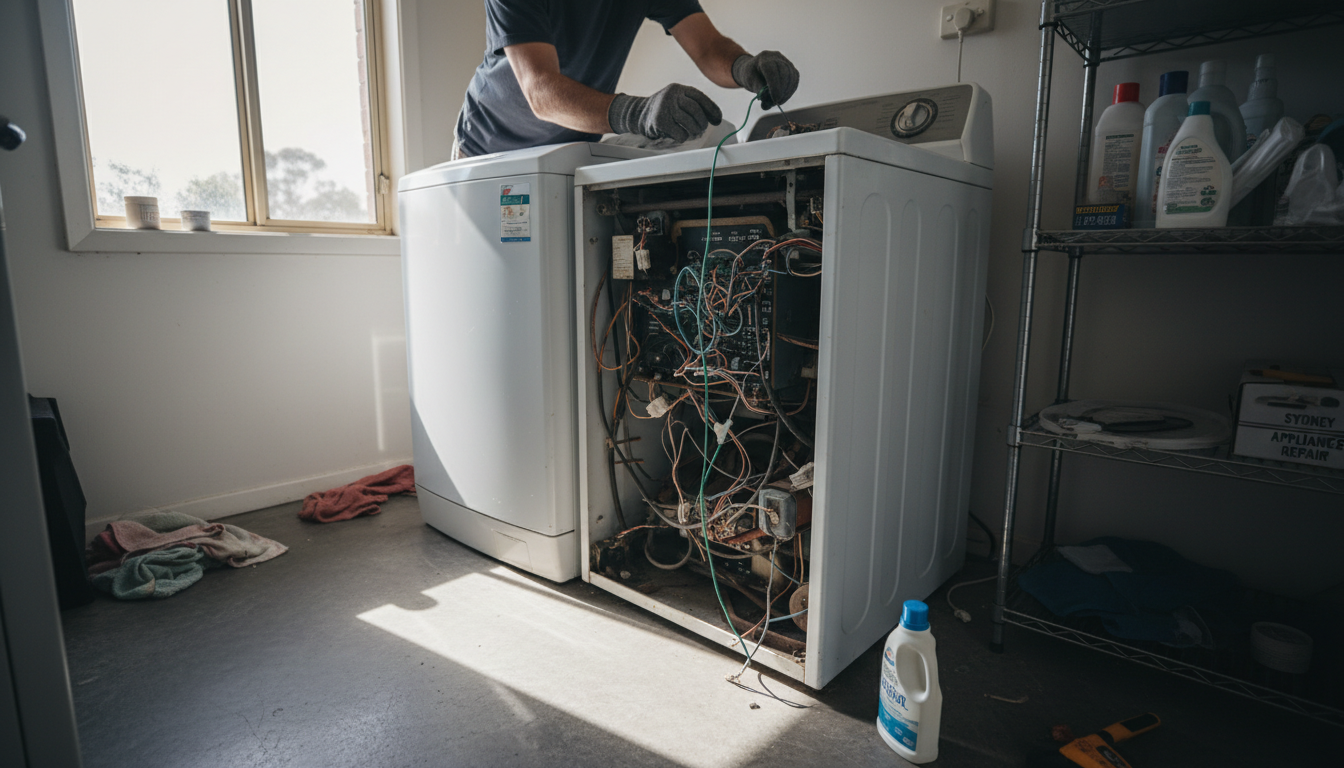
Searching for second hand appliances in Sydney often feels like the most budget-friendly option when you need to replace a fridge, washing machine, or dishwasher quickly. But private sales and online marketplaces come with serious legal, safety, and financial risks that many buyers only discover after the appliance fails weeks into ownership. Unlike commercial purchases, second hand appliances sold privately carry no statutory warranty protection under Australian Consumer Law (ACL) Schedule 2 of the Competition and Consumer Act 2010 (Cth), no verified safety compliance, and no recourse when something goes wrong. This explainer outlines the seven most significant risks Sydney buyers face when purchasing second hand appliances, and why factory outlet alternatives—brand new clearance, factory seconds, and carton damaged stock—offer the same savings with full consumer protections.
Second hand appliances are previously owned and used goods sold by private individuals or non-commercial resellers. These appliances have been installed, operated, and maintained by at least one previous owner, and their condition, service history, and remaining lifespan are typically unknown. The term “second hand” is legally distinct from “factory seconds” or “clearance stock”—a difference that fundamentally affects your consumer rights.
When you buy second hand appliances from a private seller through Facebook Marketplace, Gumtree, or a garage sale, you are purchasing outside the scope of trade or commerce as defined by the Australian Competition and Consumer Commission (ACCC). This means the seller has no obligation to provide statutory warranties, refunds, or replacements if the appliance is defective or fails shortly after purchase. Understanding the distinction between factory seconds appliances vs second hand appliances is critical before you hand over cash for what appears to be a bargain.
The most significant risk when buying second hand appliances is the complete absence of consumer guarantees. According to the Australian Competition and Consumer Commission (ACCC), consumer guarantees under Australian Consumer Law do not apply to private sales, leaving second hand appliance buyers without statutory warranty protection. Only businesses selling goods in trade or commerce must provide the guarantee of acceptable quality, fitness for purpose, and other consumer guarantees outlined in ACL Schedule 2.
When you purchase from a private seller, you have no legal right to a refund, repair, or replacement if the appliance stops working the day after you collect it. The seller is not required to disclose known defects, and you cannot pursue remedies through NSW Fair Trading or the ACCC. This stands in stark contrast to factory outlet purchases, where quality assurance and warranties on factory seconds remain fully intact regardless of cosmetic imperfections.
NSW Fair Trading reports that electrical safety compliance cannot be verified on second hand appliances sold privately, as these sales are exempt from mandatory safety standard requirements. Commercial retailers must ensure appliances meet Australian safety standards and have not been subject to product recalls, but private sellers face no such obligations.
When you buy second hand appliances, you cannot confirm whether the appliance has been recalled due to fire risk, electrical fault, or component failure. You have no way to verify whether previous owners attempted DIY repairs using non-compliant parts, or whether the appliance was ever serviced by a qualified technician. Older appliances may not meet current electrical safety standards, and faulty wiring or degraded insulation can pose serious fire and electrocution risks in your home.
Factory outlet stock from authorised retailers like 2NDS Appliances is sold with full compliance documentation, manufacturer safety certifications, and confirmation that the appliance has not been subject to any active recalls. This verification is impossible to obtain when purchasing second hand appliances from private sellers.
Private sellers rarely provide documented service history, and many second hand appliances have been repaired multiple times before being listed for sale. Without access to service records, you cannot determine whether the compressor in a fridge has been replaced, whether a washing machine has suffered bearing failure, or whether a dishwasher has been patched together with aftermarket parts.
Sellers often describe appliances as “working perfectly” or “only used lightly,” but these claims are unverifiable and carry no legal weight. An appliance may function during a brief inspection but fail within days due to underlying mechanical wear, electrical faults, or component degradation. Understanding what tested and refurbished really means highlights the difference between proper factory testing protocols and unverified private sale claims.
Factory seconds and carton damaged appliances sold by authorised retailers are brand new and unused, meaning they have no service history, no hidden repairs, and no mechanical wear. These appliances are tested to manufacturer specifications before sale, and any cosmetic imperfections are disclosed upfront with no impact on functionality.
When a second hand appliance fails shortly after purchase, buyers have no practical recourse. Private sellers are not obligated to accept returns, provide refunds, or contribute to repair costs. Most private sales are conducted on an “as is” basis, and once you have collected the appliance and paid, the transaction is final.
Even if you suspect the seller knowingly sold you a defective appliance, pursuing legal action through small claims tribunals is time-consuming, costly, and often unsuccessful. You cannot lodge a complaint with NSW Fair Trading or the ACCC, as consumer protection agencies do not have jurisdiction over private sales. The financial loss falls entirely on you, along with the cost of disposal and the need to purchase a replacement appliance.
In contrast, factory outlet purchases from commercial retailers provide full access to ACL consumer guarantees, manufacturer warranties, and retailer support. If a factory seconds appliance develops a fault, you have clear legal rights to repair, replacement, or refund under Australian Consumer Law.
Most second hand appliances are older models with poor energy efficiency ratings, and the savings you gain from a lower purchase price are quickly eroded by higher electricity bills. Energy Rating Australia data shows that replacing a 15-year-old 2-star refrigerator with a modern 4-star model can reduce annual electricity costs by $150-$200. Older washing machines and dryers similarly consume 30-50 percent more energy than current models meeting Greenhouse and Energy Minimum Standards Act 2012 (Cth) requirements.
Private sales of older appliances are exempt from energy labelling requirements, meaning you often have no reliable information about running costs. Sellers may remove or obscure energy rating labels, and you cannot verify the appliance’s actual energy consumption without independent testing. Over the lifespan of the appliance, the additional running costs can exceed the initial purchase price.
Factory outlet stock includes current-model appliances with up-to-date energy star ratings, inverter compressors, and heat pump dryer technology. These appliances meet current efficiency standards and carry the energy rating labels required under the Greenhouse and Energy Minimum Standards Act 2012 (Cth), allowing you to calculate long-term running costs accurately. Avoiding common top 5 mistakes people make when buying cheap appliances includes understanding total cost of ownership, not just upfront price.
Private sellers rarely offer delivery, and buyers must arrange their own transport, installation, and disposal of old appliances. Refrigerators, washing machines, and dishwashers are heavy, awkward to move, and require proper handling to avoid damage during transport. Many buyers underestimate the cost and complexity of hiring a van, recruiting help, and safely manoeuvring appliances through doorways and up stairs.
Installation is another hidden cost. Washing machines require connection to water supply and drainage, dishwashers need plumbing and electrical work, and refrigerators must be levelled and left to settle before use. If you lack the tools or expertise to complete installation yourself, you will need to hire a qualified tradesperson, adding further expense to your “bargain” purchase.
Disposal of your old appliance is also your problem. Council hard waste collection dates may be weeks or months away, and private disposal services charge fees for collection and recycling. Factory outlet retailers like 2NDS Appliances include free delivery Sydney wide, same-day delivery availability, and free removal of your old appliance as standard, eliminating these logistical and financial burdens entirely.
Private sales require upfront cash payment, and buyers have no access to buy now pay later services like Afterpay, Zip, Latitude, or Humm. This limits your purchasing flexibility and removes the payment protection these platforms provide. If the appliance is defective or never delivered, you have no intermediary to dispute the transaction or recover your funds.
Cash transactions also carry personal safety risks. Meeting strangers to exchange large sums of money and collect bulky appliances can be unsafe, particularly when transactions occur at private residences or in unfamiliar locations. Scams are common, with some sellers advertising appliances that do not exist or misrepresenting the condition of goods.
Commercial retailers offer secure payment processing, buy now pay later options, and the ability to inspect appliances in a safe, professional showroom environment before committing to purchase. These protections are unavailable when buying second hand appliances from private sellers.
Factory outlet stock provides the same cost savings as second hand appliances without the legal, safety, and financial risks. At 2NDS Appliances, we sell three distinct stock types, all with full consumer protections and manufacturer warranties.
Brand new clearance appliances are current or previous-season models that are completely unused and carry full manufacturer warranties. These appliances are discounted due to model changeovers, overstock, or discontinued lines, not due to any defect or imperfection.
Factory seconds are brand new appliances with minor cosmetic imperfections such as small dents, scratches, or paint blemishes that occurred during manufacturing or transport. These imperfections are purely cosmetic and do not affect functionality, energy efficiency, or lifespan. Factory seconds carry full manufacturer warranties and all ACL consumer guarantees for acceptable quality.
Carton damaged appliances have sustained damage to their packaging during transport or warehousing, but the appliance itself is typically unaffected. These units are inspected and tested before sale to confirm they meet manufacturer specifications, and they carry the same warranties and consumer protections as brand new stock.
All three stock types are significantly cheaper than full-price retail, and learning how to save big on home appliances through factory seconds allows you to access premium brands like Samsung, Fisher & Paykel, LG, and Electrolux at prices comparable to second hand appliances, but with full legal protections and verified safety compliance.
| Feature | Second Hand Appliances | Factory Outlet Stock |
|---|---|---|
| ACL Consumer Guarantees | No statutory warranty protection | Full ACL guarantees apply |
| Manufacturer Warranty | Expired or non-transferable | Full manufacturer warranty included |
| Condition | Previously used, unknown wear | Brand new, unused, cosmetic flaws only |
| Safety Compliance | Cannot be verified | Certified to Australian standards |
| Service History | Unknown, undisclosed repairs | No service history, factory tested |
| Energy Rating | Outdated, high running costs | Current models, GEMS Act compliant |
| Delivery & Installation | Buyer’s responsibility and cost | Free delivery, free old appliance removal |
| Payment Options | Cash only, no protection | Afterpay, Zip, Latitude, Humm available |
If you are searching for second hand appliances near me in South West Sydney, consider visiting a factory outlet showroom instead of relying on private sales. At 2NDS Appliances Factory Outlet, located at 1/9 Rodeo Rd, Gregory Hills NSW 2557, you can inspect brand new clearance, factory seconds, and carton damaged appliances in person before purchase. Our showroom stocks major brands including Samsung, Fisher & Paykel, LG, Westinghouse, Electrolux, Hisense, and Haier, with same-day delivery available across Sydney.
Every appliance we sell carries full manufacturer warranties and ACL consumer guarantees, regardless of stock type. We provide free delivery Sydney wide, free removal of your old appliance, and access to buy now pay later services including Afterpay, Zip, Latitude, and Humm. Our team can also advise on kitchen appliance bundle packages, which offer up to 20 percent savings when you purchase multiple appliances together.
For buyers in Gregory Hills, Oran Park, Leppington, Narellan, and surrounding South West Sydney suburbs, visiting our showroom eliminates the risks of private sales while providing access to where to find the best appliance outlet deals in Sydney. You can see the exact appliance you are purchasing, confirm its condition, and leave with full documentation of your consumer rights.
No. Under Australian Consumer Law (ACL) Schedule 2 of the Competition and Consumer Act 2010 (Cth), private sellers are not required to provide statutory warranties. Only businesses selling goods in trade or commerce must provide the guarantee of acceptable quality and other consumer guarantees, as confirmed by the Australian Competition and Consumer Commission (ACCC).
Second hand appliances are previously owned and used goods sold privately or through resellers, with no warranty obligations. Factory seconds are brand new or unused appliances with minor cosmetic imperfections sold by authorised retailers, carrying full manufacturer warranties and ACL consumer guarantees for acceptable quality.
Safety cannot be guaranteed. NSW Fair Trading requires all electrical appliances sold commercially to meet Australian safety standards, but private sales are exempt from these requirements. Buyers cannot verify whether second hand appliances have been recalled, improperly repaired, or meet current electrical safety compliance.
According to Energy Rating Australia, replacing a 15-year-old refrigerator (typically 1-2 stars) with a modern 4-star model can save approximately $150-$200 annually in electricity costs. Older washing machines and dryers similarly consume 30-50 percent more energy than current models meeting Greenhouse and Energy Minimum Standards Act 2012 (Cth) requirements.
2NDS Appliances Factory Outlet at 1/9 Rodeo Rd, Gregory Hills NSW 2557 sells brand new clearance, factory seconds, and carton damaged stock from Samsung, Fisher & Paykel, LG, and other major brands—all with full manufacturer warranties and ACL consumer guarantees. Sydney-wide delivery is available.
Shop factory seconds, carton damaged, and brand new clearance appliances at 2NDS Appliances with full manufacturer warranties and ACL consumer protections. Visit our Gregory Hills showroom or browse online for Sydney-wide delivery.
Free delivery Sydney wide. Same-day delivery available. Free removal of your old appliance. Visit our showroom at 1/9 Rodeo Rd, Gregory Hills NSW 2557 or shop online.

Specialising in fridges and freezers of all brands as well as washing machines and more, grab a bargain today on our online store or visit our showroom factory.
Mon – Fri: 9am – 5:00pm
Sat: 9am – 5pm
Sun: 10am – 4pm
© 2026 2NDS Appliances Factory Outlet. | All Rights Reserved | Website by SWE
